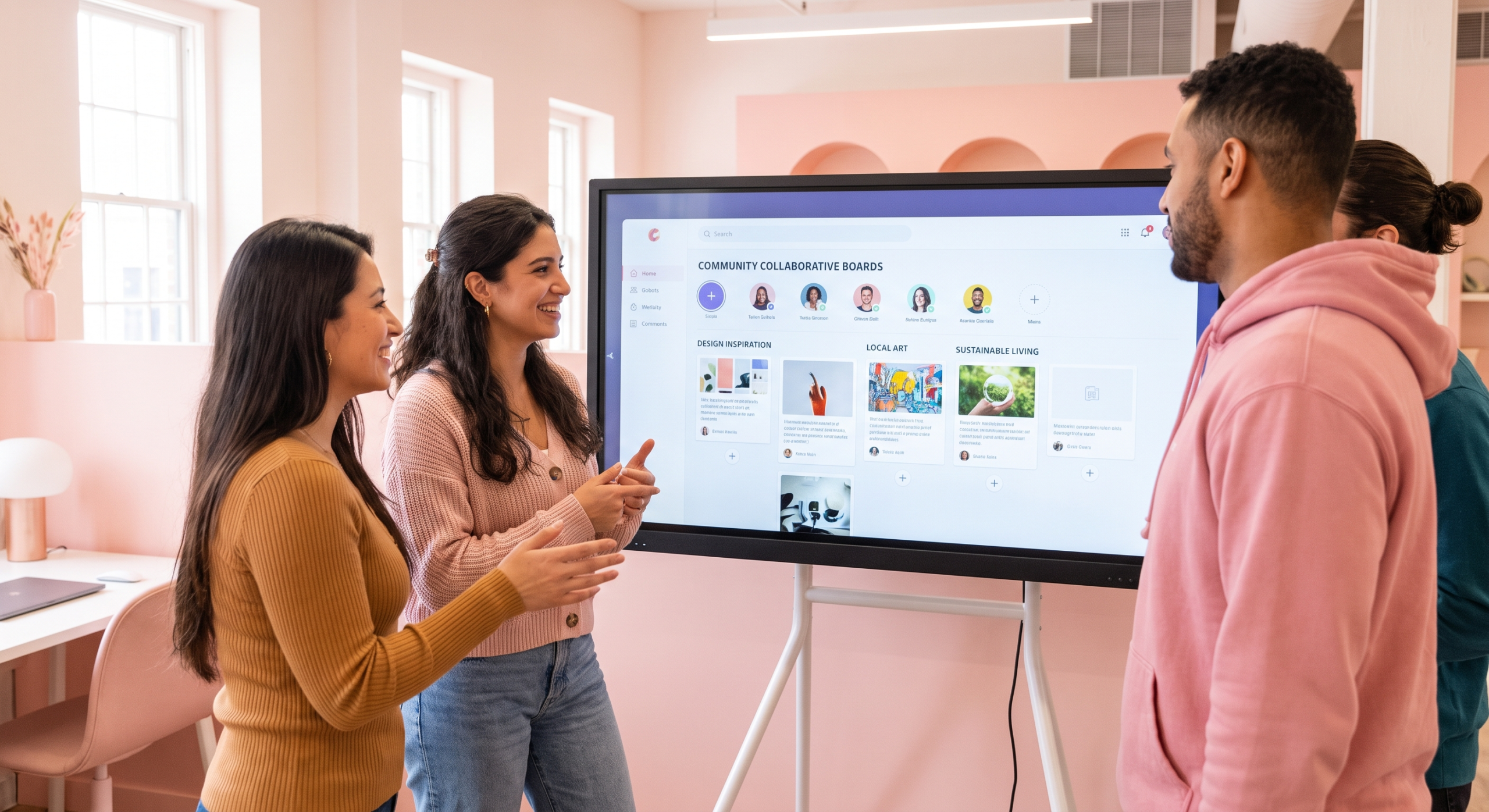
Pinterest communities and collaborative boards have undergone significant changes in recent years, but the core value proposition remains: shared boards and community features allow creators to expand their reach, find their audience, and tap into collaborative content ecosystems that no individual account could build alone. Understanding how to use Pinterest’s collaborative features strategically in 2026 gives you access to audiences and distribution that solo pinning simply can’t achieve. This guide covers how to leverage Pinterest communities, collaborative boards, and shared pinning strategies for maximum growth impact.
Pinterest Collaborative Boards in 2026: The Current Reality
Pinterest group boards (shared boards with multiple contributors) have been through significant algorithm changes since their peak popularity. Understanding the current landscape helps you invest time in collaborative features that actually deliver results.
What Changed With Group Boards
Pinterest significantly deprioritized group board content in its algorithm around 2020, and that shift has remained in place through 2026. Group boards no longer provide the exponential reach multiplication they once did. However, they haven’t become irrelevant — they still deliver value in specific use cases, particularly for highly curated boards with engaged contributors and highly focused topical themes.
What Still Works With Collaborative Boards
The collaborative boards that continue performing in 2026 share specific characteristics: tight topical focus (not generic lifestyle boards), limited contributor numbers (2–10 contributors, not 500+), active curation (boards with clear standards for what content gets added), and consistent activity from all contributors. If you’re considering joining or creating a group board, apply these filters before investing time in the collaboration.
How to Find Quality Collaborative Boards
The best way to find relevant collaborative boards is through direct outreach to creators in your niche — not through generic “join my group board” directories. Search for top creators in your niche, look at their public boards, and identify any collaborative boards they manage. Reach out with a brief, personal message explaining your niche alignment and asking if they accept contributors. Personalized outreach to niche-relevant boards yields far better collaboration opportunities than mass applications to general boards.
Pinterest Idea Pins and Community Engagement
Pinterest’s Idea Pins (formerly Story Pins) create a distinctly different community engagement opportunity compared to standard pins. Understanding how to use Idea Pins for community building complements your standard pin strategy.
Idea Pins as Community Content
Idea Pins don’t allow external links, which many creators see as a limitation. But this constraint actually encourages a different type of content — content designed to deliver value entirely within Pinterest rather than driving traffic elsewhere. This platform-native approach is what Pinterest’s algorithm rewards, making well-crafted Idea Pins more likely to be surfaced to non-followers than linked standard pins.
Engagement Features in Idea Pins
Idea Pins support emoji reactions, comments, and “tries” (where viewers can share their own attempt at an Idea Pin’s content). These engagement mechanisms create genuine community interaction around tutorial and how-to content. Creators who respond to Idea Pin comments consistently build more loyal communities than those who publish without engaging with responses.
Collaborative Idea Pins
Pinterest allows you to tag collaborators in Idea Pins, making the pin visible to both creators’ audiences. This collaborative Idea Pin format is one of the most effective current mechanisms for audience cross-pollination on Pinterest — it’s essentially a co-created pin that both parties can promote to their respective followers.
Building Your Pinterest Community Beyond the Platform
The most resilient Pinterest communities extend beyond Pinterest itself, connecting engaged followers in spaces with more community features than Pinterest natively supports.
Email List Building From Pinterest
Converting Pinterest visitors to email subscribers creates a community with direct communication channels that no algorithm change can affect. Create pins specifically designed to promote your lead magnet — a free resource valuable enough that Pinterest visitors opt in to receive it. Your email list becomes your Pinterest community’s most loyal and monetizable segment.
Facebook Groups for Pinterest Creators
Many successful Pinterest creators maintain Facebook Groups as the community hub for their Pinterest audience. The group provides a space for deeper conversation, peer support, and direct relationship building that Pinterest’s platform doesn’t support. Promoting your Facebook Group through Pinterest creates a pipeline from search-driven Pinterest discovery to engaged community membership.
Pinterest Creator Partnerships
Direct partnerships with other Pinterest creators — cross-promoting each other’s content, co-creating Idea Pins, or jointly developing resource boards — build community through collaborative relationships rather than just platform features. Creator partnerships are particularly effective when both parties have complementary (not competing) audiences in adjacent niches.
Pinterest Community Building Strategy Comparison
| Strategy | Audience Building | Engagement Depth | Algorithm Benefit | Effort Required |
|---|---|---|---|---|
| Quality group boards | Medium | Low | Low | Low (once set up) |
| Collaborative Idea Pins | High | Medium | High | Medium |
| Idea Pin comment engagement | Low (individual) | Very High | Medium | Low/daily |
| Creator partnerships | High | Medium | High | Medium |
| Email list from Pinterest | Medium | Very High | N/A (off-platform) | High (setup) |
| Facebook group for Pinterest audience | Low (redirect) | Very High | N/A (off-platform) | High |
Frequently Asked Questions
Are Pinterest group boards still worth joining in 2026?
Selective participation in high-quality, tightly focused group boards with active curation can still provide value — particularly in niches where you can find boards with genuinely engaged contributors. Generic, large group boards with hundreds of contributors and no curation standards rarely provide meaningful reach benefits. Quality over quantity: one excellent group board membership beats 50 mediocre ones.
How do I start a collaborative board on Pinterest?
Create a new board or convert an existing board to a collaborative board by clicking the pencil icon, selecting “Collaborators,” and inviting contributors by email or Pinterest username. Set clear guidelines for what content belongs on the board before inviting contributors. Start with 2–5 trusted collaborators with complementary audiences rather than opening broadly.
How do I get more comments on my Pinterest Idea Pins?
Idea Pins with explicit calls to comment earn significantly more responses than those without: “Tell me your biggest challenge with X,” “Which of these would you try first?” or “Have you tried this? Share your results!” in your Idea Pin text. Responding to all early comments signals to Pinterest’s algorithm that your Idea Pin is generating community activity and can improve its distribution.
Can I directly message Pinterest followers?
Pinterest has a direct messaging feature (Pinterest DMs) that allows account-to-account messages. However, cold outreach to unfamiliar users is not recommended — it’s generally unwelcome and Pinterest may restrict accounts that appear to be sending spam messages. DMs work best for responding to questions, continuing conversations started in comments, or coordinating with established collaborator relationships.
How do I find other Pinterest creators to collaborate with?
Search for top creators in your niche, identify those with complementary (not competing) audiences, follow them and engage authentically with their content over time, then propose collaboration after establishing a genuine relationship. Cold collaboration requests without any prior engagement have low acceptance rates. Investment in relationship-building before asking for collaboration dramatically improves outcomes.
Conclusion
Pinterest community building in 2026 works best as a multi-layered strategy: selective participation in high-quality collaborative boards, active engagement with Idea Pin comments, strategic creator partnerships, and off-platform community development through email lists and groups. The Pinterest community landscape has shifted away from the simple “join more group boards” approach that worked in earlier years, toward approaches that require genuine relationship investment and platform-native value creation. Creators who invest in those relationships and create genuinely community-building content will build Pinterest audiences that are more loyal, more engaged, and more valuable than any algorithmic trick can produce.