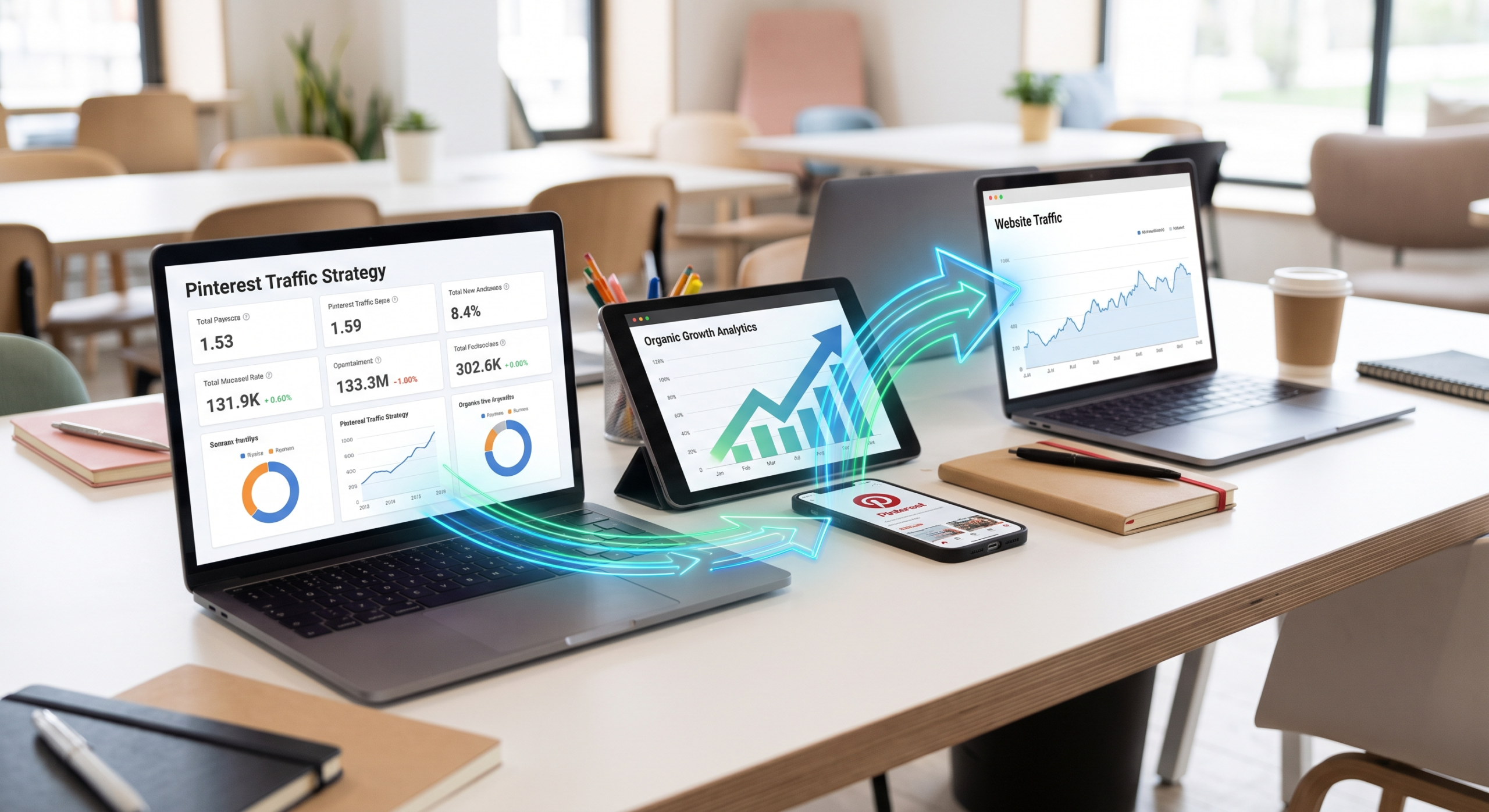
Pinterest has evolved into one of the most valuable traffic and discovery platforms for online businesses, bloggers, and content creators in 2026. Its unique combination of search-driven discovery, long content lifespan, and a buyer-minded user base creates organic traffic opportunities unmatched by other social platforms. However, building a successful Pinterest strategy requires understanding not just how to create great pins, but how to organize your account, research what your audience is searching for, and consistently deliver content that connects their searches to your content. This guide walks through the complete process of building a Pinterest strategy that drives sustainable organic traffic growth.
Setting Up Your Pinterest Foundation for Traffic
Before creating content, your Pinterest account and board structure need to be optimized to maximize how the platform distributes your content in search results.
Business Account Configuration
A Pinterest Business account is non-negotiable for anyone pursuing traffic goals. It provides access to Pinterest Analytics, the ability to claim your website (which unlocks Rich Pins and domain-level analytics), access to the Trends tool, and eligibility for the full suite of shopping and catalog features. Convert any existing personal account to Business in your settings, then complete the website verification process to unlock domain-level insights.
Profile Keyword Optimization
Your profile name and bio are indexed by Pinterest for search. Include your primary niche keyword in your display name if possible — “Sarah | Pinterest Marketing Tips” or “HomeStyled | Interior Design Ideas” — and use your bio to reinforce your niche with additional natural keyword placement. Pin boards, profile name, and bio work together to establish your account’s topical focus in Pinterest’s understanding of who you are and who your content is for.
Board Architecture for Traffic
Your board structure determines how Pinterest categorizes your content and to whom it distributes it. Create dedicated boards for each major topic in your niche, named with keyword-rich titles that mirror how your audience searches: “Minimalist Home Decor Ideas” outperforms “My Favorites.” Write 200–300 word descriptions for each board using relevant keywords. The combination of keyword-rich board names and descriptions builds topical authority that improves distribution of all pins saved to that board.
Keyword Research and Content Planning
Pinterest keyword research identifies the specific terms your audience is searching for — and therefore the exact topics your content needs to address to appear in relevant search results.
Pinterest Search Autocomplete
Pinterest’s search bar is your primary free keyword research tool. Type your seed topic and note all autocomplete suggestions. Click through to search results pages and capture the colored “guided search” bubbles that appear — these represent Pinterest’s most-searched subtopics within your broader term. Each bubble is a potential pin topic and keyword target.
Pinterest Trends
Pinterest’s free Trends tool shows relative search volume for specific terms over time, broken down by season. Use it to identify whether a term has consistent year-round search volume or seasonal peaks, when those peaks occur, and whether interest is growing or declining. Timing content creation 4–6 weeks before seasonal search peaks maximizes the traffic each piece of seasonal content can earn.
Mapping Keywords to Content
Once you’ve compiled a keyword list, map specific keywords to specific content pieces. Each pin should have a primary keyword target that determines its title, description, and — where possible — the visual content itself. Content without a clear keyword target is essentially invisible to Pinterest’s search engine, regardless of how beautiful the pin design is.
Creating Pins That Drive Traffic
Traffic-driving pins need to accomplish two things: appear in search results (keyword optimization) and convince the searcher to click through to your content (visual and description quality).
Pin Image Best Practices for CTR
The image is what stops a scroller’s thumb. High-performing Pinterest images in 2026 typically feature: 2:3 vertical aspect ratio (1000x1500px), clear and immediate visual communication of the pin’s subject, text overlay that reinforces the topic for those reading rather than looking, and brand consistency (colors, fonts) that makes your pins recognizable in a feed. Test different image styles for the same piece of content to identify which visual approach earns the most clicks from your specific audience.
Pin Title and Description for Search
Lead your pin title with your primary keyword. Keep titles under 100 characters and make them read naturally — don’t keyword-stuff. Use the description (150–300 words) to provide context, include secondary keywords naturally, and include a clear call to action directing readers to click through. Descriptions that tell the reader exactly what they’ll find when they click — and why it’s valuable — earn higher click-through rates than generic descriptions.
Fresh Pin Variations
Pinterest rewards fresh content — new pins, even to the same URL. Create 3–5 pin variations per piece of content: different images, slightly different titles and descriptions targeting related keyword variations. Spread these variations over several weeks to continuously send fresh signals to Pinterest’s algorithm while maximizing the total reach of each piece of content you create.
Pinterest Traffic Strategy Comparison
| Content Type | Traffic Longevity | SEO Value | Creation Effort | Best Traffic Source |
|---|---|---|---|---|
| Evergreen how-to pins | 12–24 months | Very High | Medium | Pinterest Search |
| Seasonal content pins | 4–8 weeks/year | High (seasonal) | Medium | Pinterest Search |
| Product/shopping pins | 12+ months | High | Low (catalog) | Shopping Tab |
| Trending topic pins | Days–weeks | Low | Low–Medium | Home Feed |
| Video pins (tutorials) | 6–12 months | High | High | Search + Feed |
| Idea Pins | Weeks–months | Low (no links) | Medium | Home Feed |
Frequently Asked Questions
How long does it take to get Pinterest traffic?
Most new Pinterest accounts see initial traction (measurable search impressions and clicks) within 2–3 months of consistent, optimized pinning. Significant organic traffic — tens of thousands of monthly visitors — typically takes 6–12 months to build. Pinterest traffic compounds over time: pins published months ago continue driving traffic, so each new pin adds to an existing traffic base rather than replacing it.
How many pins should I publish per day for traffic growth?
5–15 pins per day is the commonly recommended range for active traffic growth. Quality matters more than volume — 5 excellent, keyword-optimized pins outperform 20 generic ones. Use scheduling tools (Tailwind or Pinterest’s native scheduler) to maintain consistent daily publishing without requiring manual daily posting.
Does pinning other people’s content help my account?
Repinning others’ content has minimal direct benefit for your traffic in 2026. Pinterest’s algorithm prioritizes your own original pins over repins. Focus your pinning energy on creating and distributing your own content. Repinning as a community gesture is fine in moderation, but don’t rely on it as a traffic strategy.
What’s the best Pinterest analytics tool?
Pinterest’s native analytics provides the most accurate data for your account. For deeper analysis, Tailwind’s analytics and third-party tools like Pinalytics offer additional insights including optimal posting times, top-performing pin identification, and trend analysis. The most important metrics for traffic goals: impressions (reach), outbound clicks (traffic to your site), and click-through rate (quality of your pin presentation).
Can Pinterest drive traffic to an e-commerce store?
Yes — Pinterest is one of the most effective platforms for e-commerce traffic, particularly for visually oriented products. Connect your product catalog to Pinterest, enable Rich Pins, and create keyword-optimized product pins targeting purchase-intent searches. Pinterest’s search-driven, buyer-minded user base makes it a natural complement to e-commerce SEO strategies.
Conclusion
Building a Pinterest strategy that drives sustainable organic traffic requires systematic keyword research, a well-structured board architecture, consistently keyword-optimized pin creation, and the patience to let the platform’s compounding traffic model work over time. The creators and businesses generating significant Pinterest traffic in 2026 aren’t doing anything magical — they’ve simply applied the fundamentals consistently and let the compound effect of a growing library of search-optimized pins do the work. Start with your keyword research, map topics to your content calendar, commit to consistent pin creation, and track your progress quarterly. Pinterest traffic is slow to start and fast to compound — the investment you make today will drive returns for years to come.
Leave a Reply