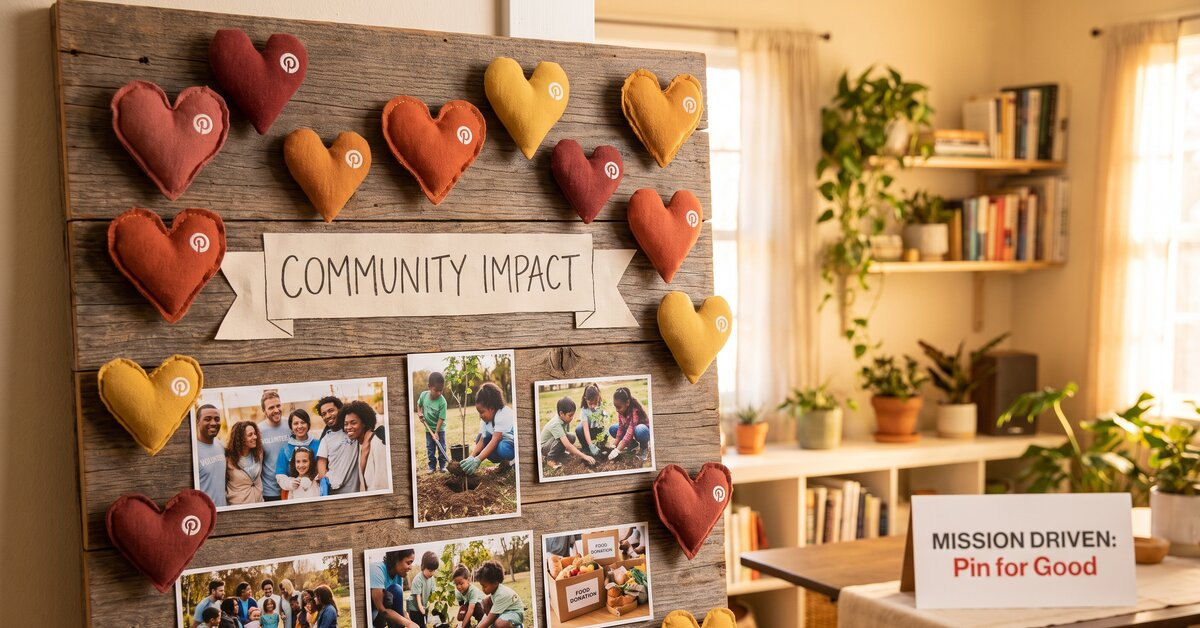
Nonprofits and social impact organizations face a perpetual challenge: maximum impact with minimal resources. Marketing budgets that might sustain a few days of Facebook ads in a for-profit business need to stretch across entire quarters for many nonprofits. Pinterest, with its low-cost organic reach, long content shelf life, and high-intent audience, offers mission-driven organizations a disproportionate return on their content investment. The organizations succeeding on Pinterest in 2026 aren’t those with the biggest budgets — they’re the ones who understand how to translate their mission into visual, inspirational, and actionable content that Pinterest’s audience saves and shares.
Why Pinterest Is Uniquely Suited to Nonprofit Missions
The alignment between Pinterest’s content culture and nonprofit communication goals is stronger than most organizations realize.
Aspiration Meets Action
Pinterest users are aspirational planners — they save content that represents a better version of their home, health, lifestyle, or community. This aspirational energy aligns perfectly with nonprofit messaging, which typically centers on a better world, better communities, or better individual outcomes. A nonprofit focused on urban gardening, affordable housing, environmental conservation, or community health finds a naturally receptive audience among Pinterest’s planning-oriented users.
Visual Storytelling at Scale
Nonprofits generate some of the most compelling visual stories available — beneficiary transformations, community events, volunteer moments, environmental before-and-afters. Pinterest’s image-first format is built for this kind of emotional visual storytelling. A single powerful image with a compelling description can travel across Pinterest’s search ecosystem for years, raising awareness for your cause with zero ongoing promotion cost.
Evergreen Education Opportunity
Most nonprofits have educational missions — raising awareness about issues that require sustained public understanding. Pinterest’s long content shelf life makes it ideal for evergreen educational content. An infographic explaining the scope of food insecurity in your region, published today, can appear in Pinterest searches for years — continuously educating new audiences who are just discovering your issue area.
Pinterest Content Strategy for Nonprofits
Awareness-Building Content
The top of your Pinterest content funnel should raise awareness and education about your cause. This includes: infographics that make complex social issues visually comprehensible, data visualizations that illustrate the scope of the problem you’re solving, before-and-after transformations that show the impact of your work, and “did you know” fact graphics that challenge assumptions about your issue area. These posts prioritize saves and shares over click-throughs — they succeed when they change how people understand an issue.
Inspiring Action Content
Middle-funnel content invites the audience to take a first step: volunteer at an event, sign up for your newsletter, share your campaign, or make a small donation. Action-oriented Pins perform best when they: make the action feel achievable (“10 minutes of your time”), emphasize community (“join thousands of others”), and connect clearly to outcome (“your $25 provides X”). These Pins should link to specific, mobile-optimized landing pages, not your homepage.
Community Celebration Content
Content that celebrates your community — volunteers, donors, beneficiaries, partner organizations — builds emotional connection and social proof simultaneously. “Volunteer spotlight” posts, impact milestone celebrations (“We just served our 10,000th meal”), and “thank you” content to your supporter community make existing supporters feel valued while demonstrating credibility to potential new supporters. This content drives shares from the people featured and their networks.
Practical Resource Content
Nonprofits that provide practical resources — whether that’s a food pantry, legal aid clinic, mental health support, or environmental education — can use Pinterest to distribute these resources directly. How-to guides, resource directories, self-help content in your issue area, and practical tips related to your mission all serve the dual purpose of providing immediate value and establishing your organization as the go-to authority in your space.
Board Strategy for Nonprofits
Mission-Focused Boards
Create dedicated boards for each major aspect of your mission. An environmental nonprofit might have boards for: “Climate Action Tips,” “Sustainable Living Ideas,” “Conservation Projects,” “Youth Environmental Education,” and “Wildlife Protection.” These boards serve both organizational and SEO purposes — they help Pinterest understand your topical authority and make it easy for interested users to explore your content by subtopic.
Resource Boards for Your Community
Creating boards of curated resources — third-party articles, tools, and guides relevant to your community’s needs — provides value that extends beyond your own content. A domestic violence prevention organization might curate boards of safety planning resources, healing and recovery content, and community support tools. This curation positions your organization as a trusted guide within your space, not just a self-promoter.
Nonprofit Pinterest Content Calendar
| Content Type | Frequency | Primary Goal |
|---|---|---|
| Impact story/infographic | 1–2x/week | Awareness + shares |
| Educational fact/data visual | 2x/week | Authority + saves |
| Volunteer/donor spotlight | 1x/week | Community + social proof |
| Action CTA Pin | 1x/week | Conversions + engagement |
| Curated resource Pins | 3–5x/week | Value + board building |
| Event promotion | As needed | Attendance + awareness |
Pinterest Ads for Nonprofits
Pinterest offers discounted advertising rates for qualified 501(c)(3) organizations through its nonprofit program. Promoted Pins can target by interest, keyword, and demographic — allowing nonprofits to reach specific audiences with fundraising campaigns, volunteer recruitment, and awareness initiatives at lower cost than comparable social media advertising. For nonprofits with even modest advertising budgets, Pinterest’s high-intent audience and lower CPCs compared to Facebook and Instagram make it a high-value channel for cause marketing.
Measuring Pinterest Impact for Nonprofits
Track these metrics to understand your Pinterest ROI: Website referral traffic from Pinterest (set up UTM parameters for all Pins), email newsletter signups from Pinterest-referred traffic, event registrations from Pinterest, donation completions from Pinterest traffic, and volunteer applications from Pinterest referrals. These conversion metrics tell a more complete story than impressions or saves alone — though saves are also valuable as signals of content resonance and ongoing awareness.
Frequently Asked Questions
Is Pinterest free for nonprofits?
Yes. Pinterest Business accounts (required for analytics and advertising) are free. There are no fees for organic content publishing, board creation, or using Pinterest’s basic features. Nonprofits that qualify for Pinterest’s charity program may receive additional advertising credits — contact Pinterest directly to inquire about eligibility.
What type of nonprofit does best on Pinterest?
Nonprofits in visually rich issue areas perform best: environmental conservation (stunning nature imagery), food security (food and recipe content), education (classroom and learning content), health and wellness, animal welfare, arts and culture, and housing and community development. Nonprofits in more abstract policy advocacy areas can still succeed on Pinterest but need to focus on making their issues tangible and visual through infographics and data visualization.
Can nonprofits raise money directly through Pinterest?
Not through a native donation feature, but Pinterest can be an effective top-of-funnel channel that drives donors to your website. Pins that tell compelling stories about your impact and link to donation landing pages consistently drive meaningful traffic to nonprofit donation forms. Pinterest’s audience includes many users with disposable income actively planning how to use it — cause marketing content that resonates can convert this audience effectively.
How much time does Pinterest require for nonprofits?
A sustainable nonprofit Pinterest strategy requires 3–5 hours per week for content creation, scheduling, and basic analytics review. Many nonprofits find Pinterest more time-efficient than Instagram or Facebook because content has a much longer shelf life — a well-optimized Pin published today can drive traffic for years without ongoing promotion. Tools like Tailwind can reduce scheduling time to under an hour per week once your content pipeline is established.
Conclusion
Pinterest is one of the highest-ROI marketing channels available to nonprofits willing to invest in a consistent, mission-aligned content strategy. Its visual format, planning-oriented audience, long content shelf life, and relatively low competition in most nonprofit niches create genuine opportunities for organizations that can’t compete on paid advertising spend. By translating your mission into inspiring, educational, and actionable visual content — and consistently delivering it through well-organized boards optimized for Pinterest search — your organization can build awareness, attract volunteers, and drive donations from one of the internet’s most purchase-intent and cause-aligned audiences.