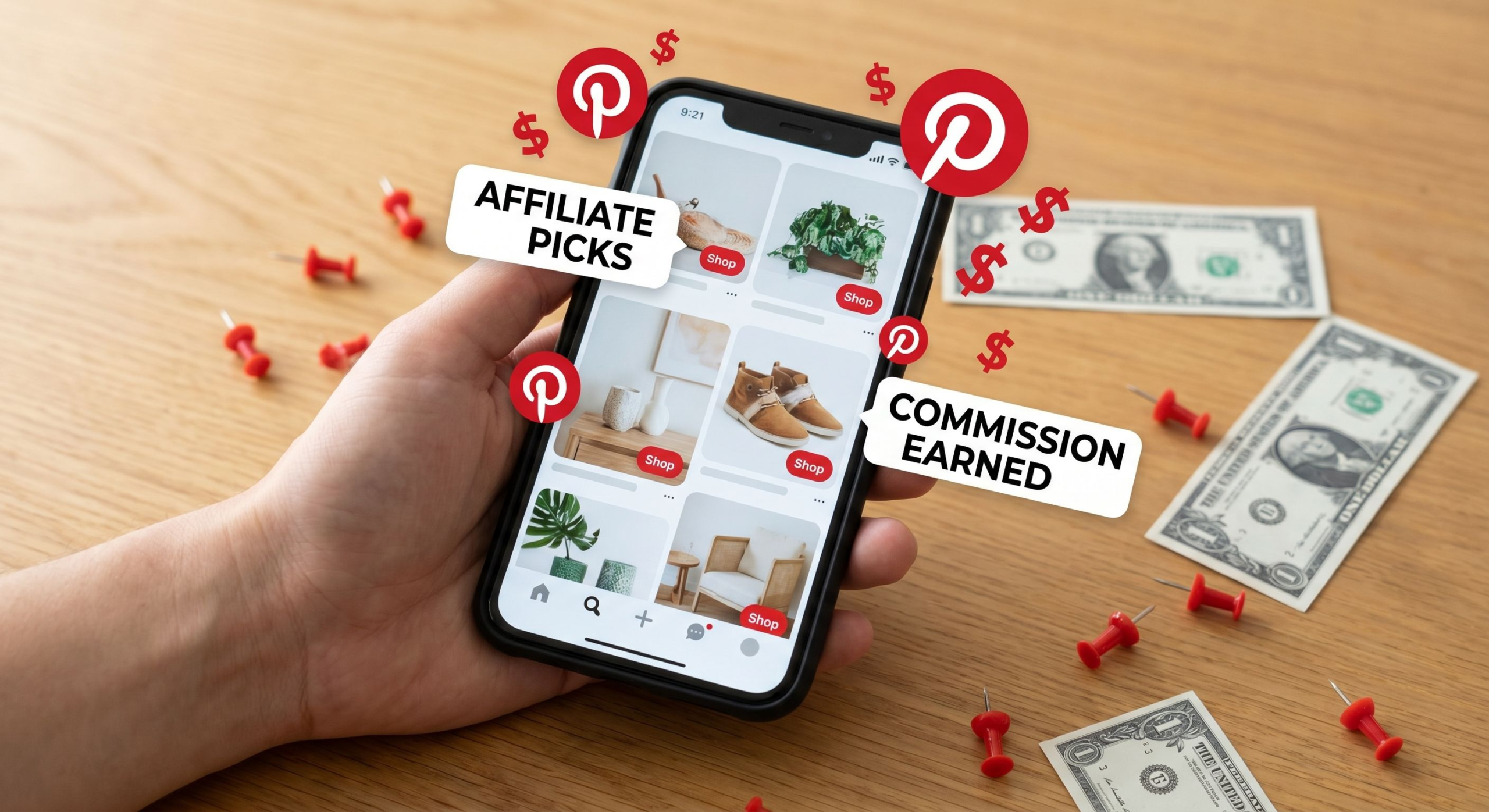
Pinterest affiliate marketing is one of the most underrated income streams for content creators in 2026. Unlike SEO blogging or YouTube, Pinterest lets you get affiliate content in front of motivated shoppers without building an audience first — and unlike Instagram or TikTok, you can include clickable affiliate links directly in your pins. This guide shows you the complete process for earning affiliate income on Pinterest, whether you have a blog or not.
Why Pinterest Is Ideal for Affiliate Marketing
Pinterest’s unique combination of visual discovery, high-intent search behavior, and long pin lifespan creates exceptional conditions for affiliate marketing that most other platforms can’t match.
High Purchase Intent Audience
Pinterest users are in planning mode. Someone searching “living room furniture ideas” is likely considering a purchase — not just browsing for entertainment. This purchase intent converts to affiliate commissions at rates significantly higher than social platforms where users are in passive entertainment mode. Studies consistently show Pinterest referral traffic converts 2-3x better than traffic from most social platforms.
Long Pin Lifespan
Unlike Instagram or TikTok posts that peak within 48 hours and disappear, Pinterest pins can drive traffic and affiliate commissions for months or years. A well-optimized affiliate pin created today could still be generating income in 2027. This compounding effect makes Pinterest one of the most efficient platforms for affiliate income on a per-hour-of-effort basis.
Affiliate Links Allowed Directly in Pins
Pinterest explicitly allows affiliate links in pins — a significant advantage over Instagram (which requires bio link workarounds) and YouTube (which requires careful disclosure in descriptions). Pinterest simply requires proper FTC disclosure that the link is an affiliate link, which you include in your pin description.
How Pinterest Affiliate Marketing Works
The basic model: you create pins that link to products, if someone clicks your pin and makes a purchase, you earn a commission. Here’s the complete flow.
Step 1: Join Affiliate Programs
The most commonly used affiliate programs for Pinterest creators: Amazon Associates (wide product selection, lower commissions — 1-10%), LTK (formerly rewardStyle — fashion, home, beauty focus, invite-only), ShareASale (aggregates hundreds of brand programs), Impact Radius (major brands, competitive rates), RewardStyle/LTK (lifestyle focus), and individual brand programs through their websites. For Pinterest specifically, programs with strong visual products (home decor, fashion, beauty, food, tech) perform best.
Step 2: Get Your Affiliate Links
Once approved, each program provides a dashboard where you can generate custom affiliate tracking URLs for specific products. These links contain your unique affiliate ID, which attributes any resulting sale to your account. Always generate links through the official affiliate program dashboard — never modify affiliate URLs manually.
Step 3: Create Pinterest Pins With Your Links
Create a vertical image (1000x1500px recommended) showcasing the product in an inspiring context. Write a keyword-rich pin description that naturally includes your primary search keywords. In the destination URL field, paste your affiliate link. In the description, include your disclosure (required by FTC): “This pin contains affiliate links — I may earn a commission at no cost to you if you purchase through this link.”
Step 4: Organize Pins Into Relevant Boards
Create topically organized boards that align with your affiliate products. A home decor affiliate marketer might have boards for “Living Room Inspiration,” “Bedroom Furniture Ideas,” and “Kitchen Organization.” Each board should have a keyword-rich description. Pin a mix of affiliate and non-affiliate content — boards that are 100% affiliate content perform worse than those with a natural mix of inspirational and affiliate pins (aim for 70% non-affiliate, 30% affiliate).
Creating High-Converting Affiliate Pins
Not all affiliate pins are created equal. These design and copy principles separate high-converting pins from the noise.
Show the Product in Context
Lifestyle images consistently outperform product-on-white-background images on Pinterest. Show the product in use in a beautiful setting — furniture in a styled room, clothing on a person in an aspirational outfit, kitchen tools in a recipe preparation context. Pinterest users are saving inspiration, not browsing a catalog.
Use Text Overlays Strategically
Adding a brief text overlay to your pin image can dramatically improve click-through rate. Effective overlays: the product’s key benefit (“30% off today only”), a search-term-aligned label (“Best Ergonomic Office Chair 2026”), or a CTA (“Tap to shop”). Keep overlays minimal — they should enhance, not cover, the product image.
Write Descriptions That Rank in Pinterest Search
Pinterest descriptions are indexed for search. Include your target keyword in the first 20 words, add 2-3 secondary keywords naturally throughout, and describe specific product benefits (not just “great product” but “adjustable lumbar support, 5-year warranty, available in 8 colors”). End with your affiliate disclosure and a CTA.
Pinterest Affiliate Marketing: Performance by Niche
| Niche | Avg. Commission Rate | Conversion Potential | Pinterest Search Volume | Competition Level |
|---|---|---|---|---|
| Home Decor | 4-10% | Very High | Very High | High |
| Fashion | 5-15% | High | Very High | Very High |
| Beauty | 5-20% | High | High | High |
| Food/Kitchen | 3-8% | High | Very High | Medium |
| Digital Tools/Software | 20-50% | Medium | Medium | Low |
| Baby/Parenting | 4-8% | Very High | High | Medium |
| Travel | 2-6% | Medium | Very High | High |
FTC Disclosure Requirements for Pinterest Affiliate Links
Disclosure isn’t optional — it’s a legal requirement in the US and many other jurisdictions. Here’s how to comply correctly.
What You Must Disclose
The FTC requires that material connections (including affiliate relationships where you earn commissions on sales) be disclosed clearly and conspicuously before the affiliate link. On Pinterest, this means including your disclosure in the pin description — before the affiliate link, or at least within the first visible portion of the description. Using hashtags like #ad or #affiliate, or writing “This post contains affiliate links,” both satisfy the requirement.
What Doesn’t Count as Proper Disclosure
Small print disclosure. Disclosure buried after the affiliate link. Vague language like “this site contains partnerships.” Full, clear, upfront disclosure is required — and it’s the right thing to do for your audience’s trust, regardless of legal requirements.
FAQ: Pinterest Affiliate Marketing
Can you do affiliate marketing on Pinterest without a blog?
Yes. Pinterest allows affiliate links directly in pins, so you don’t need a blog or website to participate. Create your affiliate pins linking directly to merchant pages. A website or blog allows you to add more context and capture email leads, but it’s not required to earn affiliate income from Pinterest.
Does Pinterest allow affiliate links in 2026?
Yes. Pinterest explicitly permits affiliate links in pin destinations. They briefly banned third-party affiliate links in 2015 before reversing that policy. As of 2026, affiliate links are allowed with proper disclosure. Some affiliate networks have Pinterest-specific rules — always check your program’s terms.
How many affiliate pins should I post per day?
Aim for no more than 30% affiliate pins across your total daily pinning activity. If you’re pinning 10 times per day, 3 can be affiliate pins. More than this ratio makes your account feel commercial rather than inspirational, which hurts both algorithmic performance and audience trust.
Which affiliate programs work best with Pinterest?
Amazon Associates (wide product selection, trusted brand), LTK (lifestyle products with high Pinterest relevance), ShareASale brands (many home, fashion, and lifestyle brands), and brand-direct programs in your specific niche. High-ticket programs (digital tools, courses) can be profitable with smaller Pinterest audiences due to higher commission rates.
How long does it take to earn money with Pinterest affiliate marketing?
Most creators see their first affiliate commissions within 30-60 days if they’re pinning consistently. Meaningful monthly income typically requires 3-6 months of consistent effort. Pinterest’s compounding traffic dynamics mean income tends to grow slowly at first, then accelerate as pins age and accumulate saves.
Conclusion
Pinterest affiliate marketing in 2026 rewards creators who combine visual creativity, keyword strategy, and consistent publishing over time. The foundation is simple: join affiliate programs aligned with your niche, create beautiful pins that link to relevant products, disclose your affiliate relationships clearly, and publish consistently. The compounding dynamics of Pinterest — where pins generate traffic and commissions months after posting — make it one of the best platforms for building passive affiliate income without the full infrastructure requirement of a major blog or YouTube channel. Start with 2-3 affiliate programs, create 5 pins per week, and track your results at 90 days.